
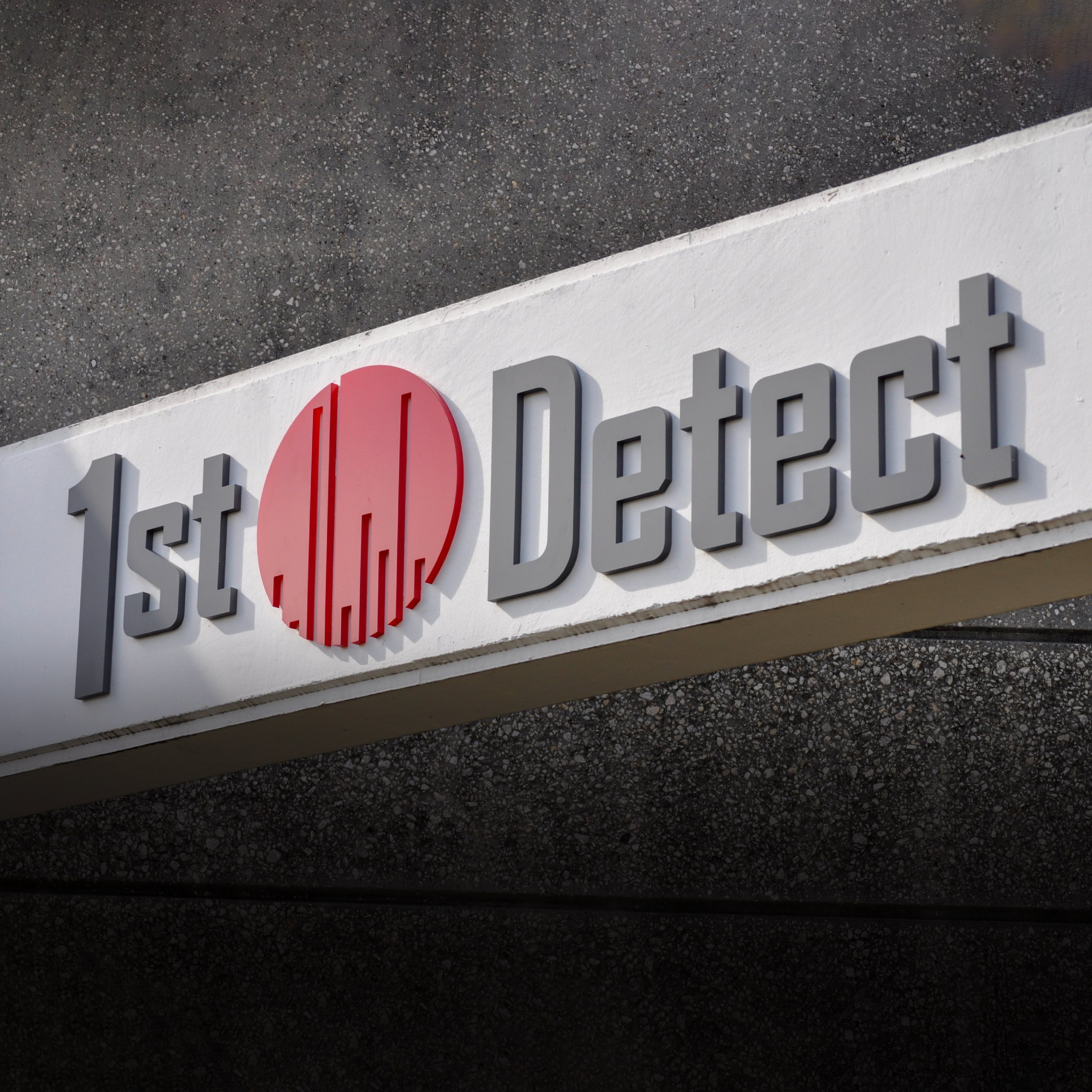
Custom Outdoor Building Signs in Houston
Planning an outdoor building sign involves more than selecting the sign itself. Site surveys, engineering, permitting, fabrication, and installation all need to be coordinated, and we manage each stage from start to finish.
Since 2004, Saifee Signs has built outdoor business signs for Houston companies, schools, healthcare campuses, industrial properties, and municipal facilities. Recent work includes Ivy at The Galleria, Pandell, Little York Fire Station, and HRS.
Your project stays with one point of contact from the first site visit through final exterior signage installation. When specialized fabrication is required, we coordinate it as part of the project, so you're never managing multiple vendors yourself.
Send us photos of your building and the site address, and we'll come back with sign options, a budget range, and what the local sign code allows. Or scroll down to compare outdoor sign types for Houston properties.
Monument Sign For The Ivy At The Galleria
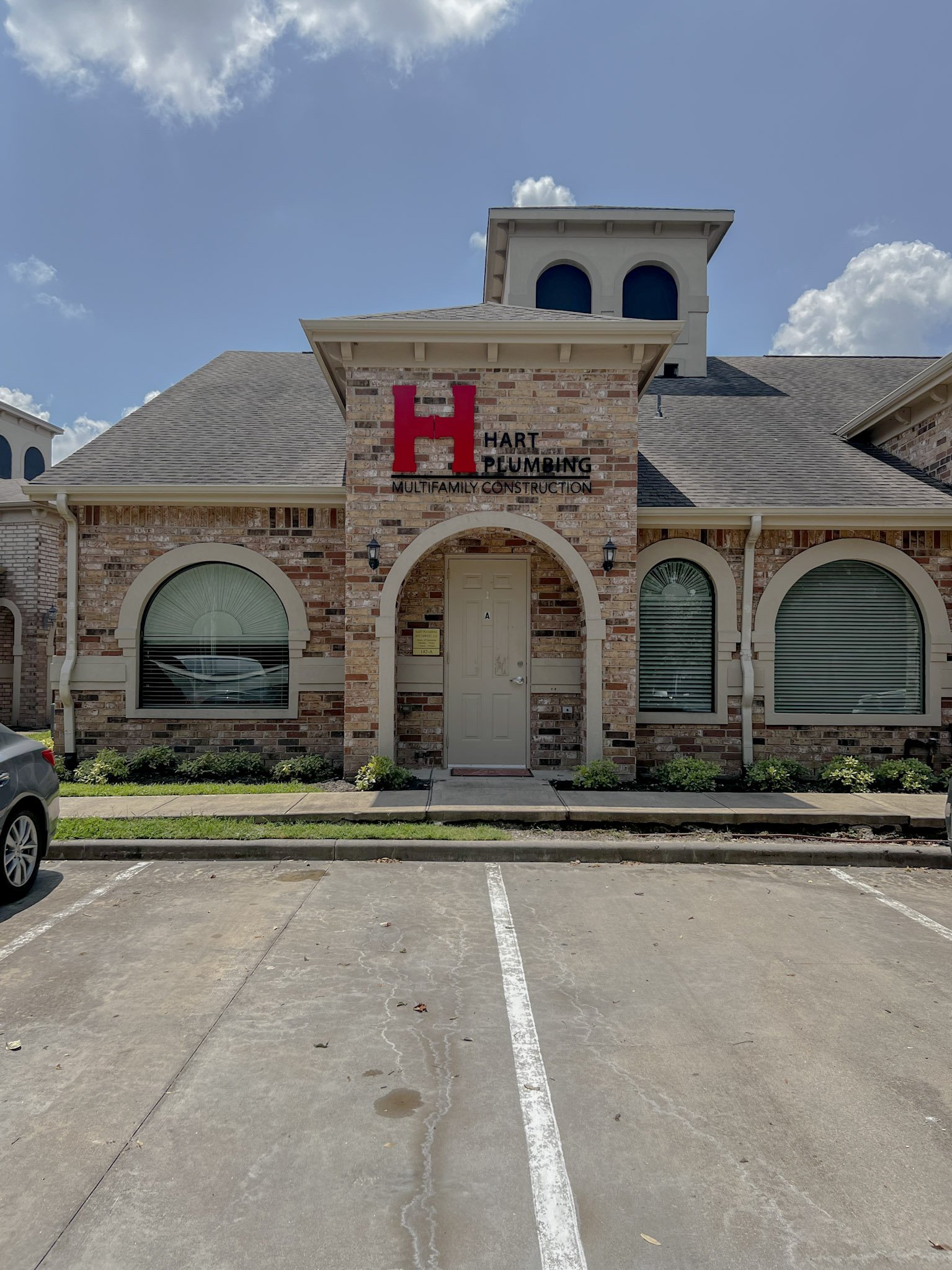
Backplated Wall Sign For Pandell
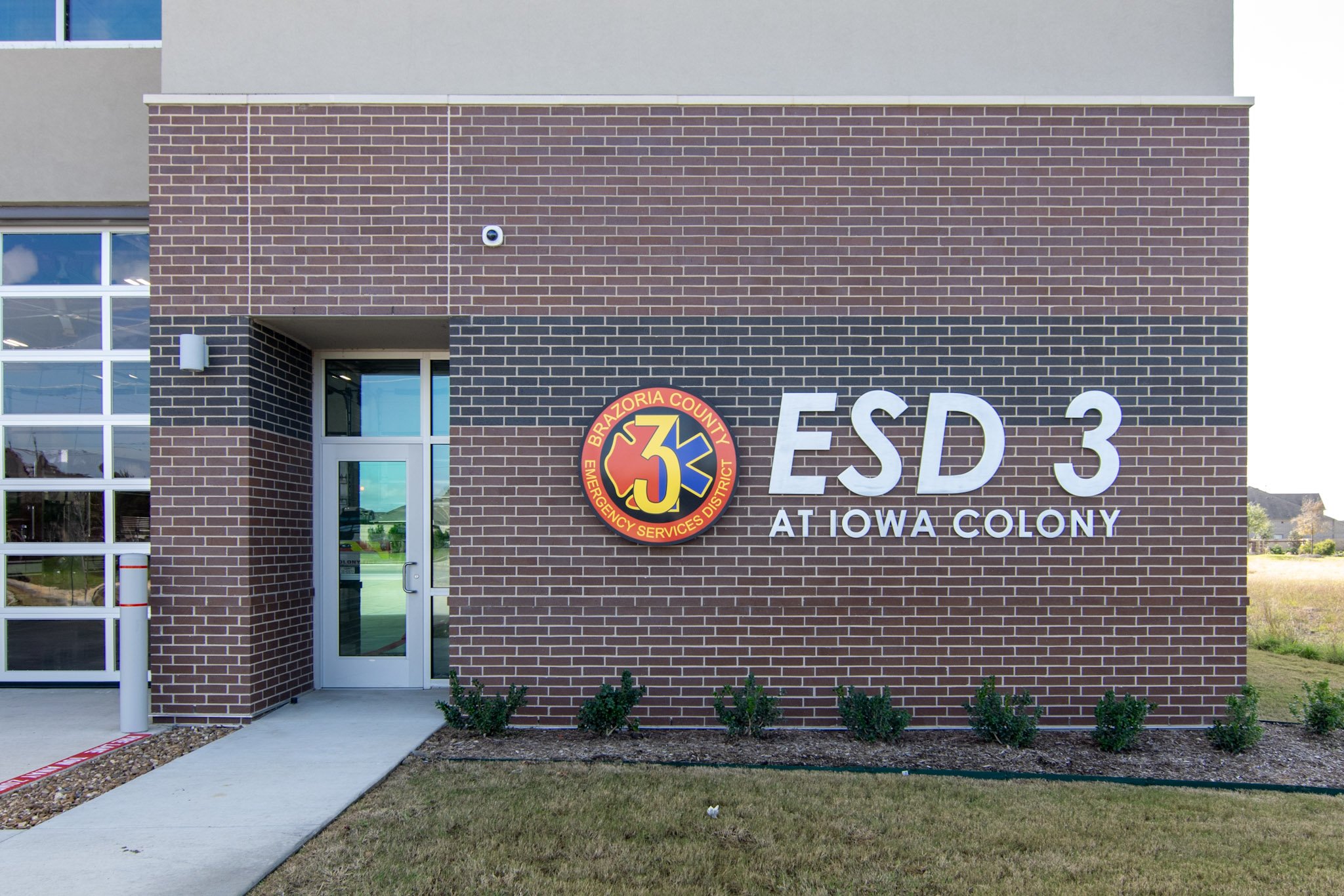
Exterior Dimensional Wall Letters For Fire Department
Directional Pole Sign For HRS
Outdoor Sign Materials Built for Houston's Climate
Houston weather is hard on exterior building signs. Heat, humidity, wind-driven rain, and constant UV exposure age a sign faster here than in most of the country, and the material determines whether your sign still looks right in year eight.
Aluminum handles most outdoor building signs. It does not rust, it holds its finish through humidity cycles, and it stays light enough for elevated wall mounting, which makes it the default for dimensional letters, sign cabinets, and backer panels on commercial building signs. Acrylic is used where light passes through the face or where a clean painted surface matters, so it appears in illuminated letter faces and mounted letters on storefront signs. Steel goes where a sign carries load rather than where it is seen, supporting monument frames and pylon structures engineered for Houston wind loads.
Material is only one variable. How a sign is sealed and mounted determines whether water reaches the electrical components. We review the full assembly before fabrication, so your outdoor signage performs as an installation rather than a set of well-chosen parts.
Outdoor Building Sign Permitting and Engineering
Not all outdoor signs need a permit. Size, height, illumination, and location determine whether one is required, and the thresholds shift from one jurisdiction to the next. A monument sign in Sugar Land, a wall sign in Katy, and a pylon sign in The Woodlands each follow a different approval path. Setback and height limits vary with them.
One difference is worth knowing before you budget. In unincorporated Harris County, the sign permit is a one-time approval with no annual renewal. Inside Houston city limits, you receive two. A construction permit covers the installation, and an annual operating permit renews for as long as the sign stays up. That operating permit is an ongoing ownership cost, and it belongs in the project budget from the start.
Exterior building signs on leased property carry another layer of approval. Shopping centers, office parks, and healthcare campuses usually maintain their own sign criteria covering size, materials, and placement. Landlord approval often has to come before the city will review anything. We identify both requirements early, because catching a landlord requirement before fabrication is the difference between a revision and a rebuild.
Some signs also need sealed engineered drawings before a permit is issued. A wall sign mounted higher than eight feet above grade, or larger than 60 square feet, requires sealed drawings and analysis. We coordinate with licensed Texas engineers and include that documentation in the original submission, which keeps the project from stalling after your design is approved.
TYPES OF OUTDOOR BUILDING SIGNS FOR HOUSTON BUSINESSES
Click an image below to learn more about that signage type
MONUMENT SIGNS
Monument signs sit at ground level near an entrance or property line. For many properties they are the first piece of permanent commercial signage a visitor sees on arrival, confirming the right entrance and carrying the property's identity. They work well for schools, healthcare campuses, apartment communities, and multi-tenant developments where the entrance is not obvious from the street.
Common materials include stone, brick, aluminum, and acrylic, often combined with dimensional lettering and internal illumination so the sign still reads after dark. A monument sign is a permanent structure on an engineered foundation. Its location is determined during design rather than adjusted later, with sight lines and landscaping reviewed before construction begins.
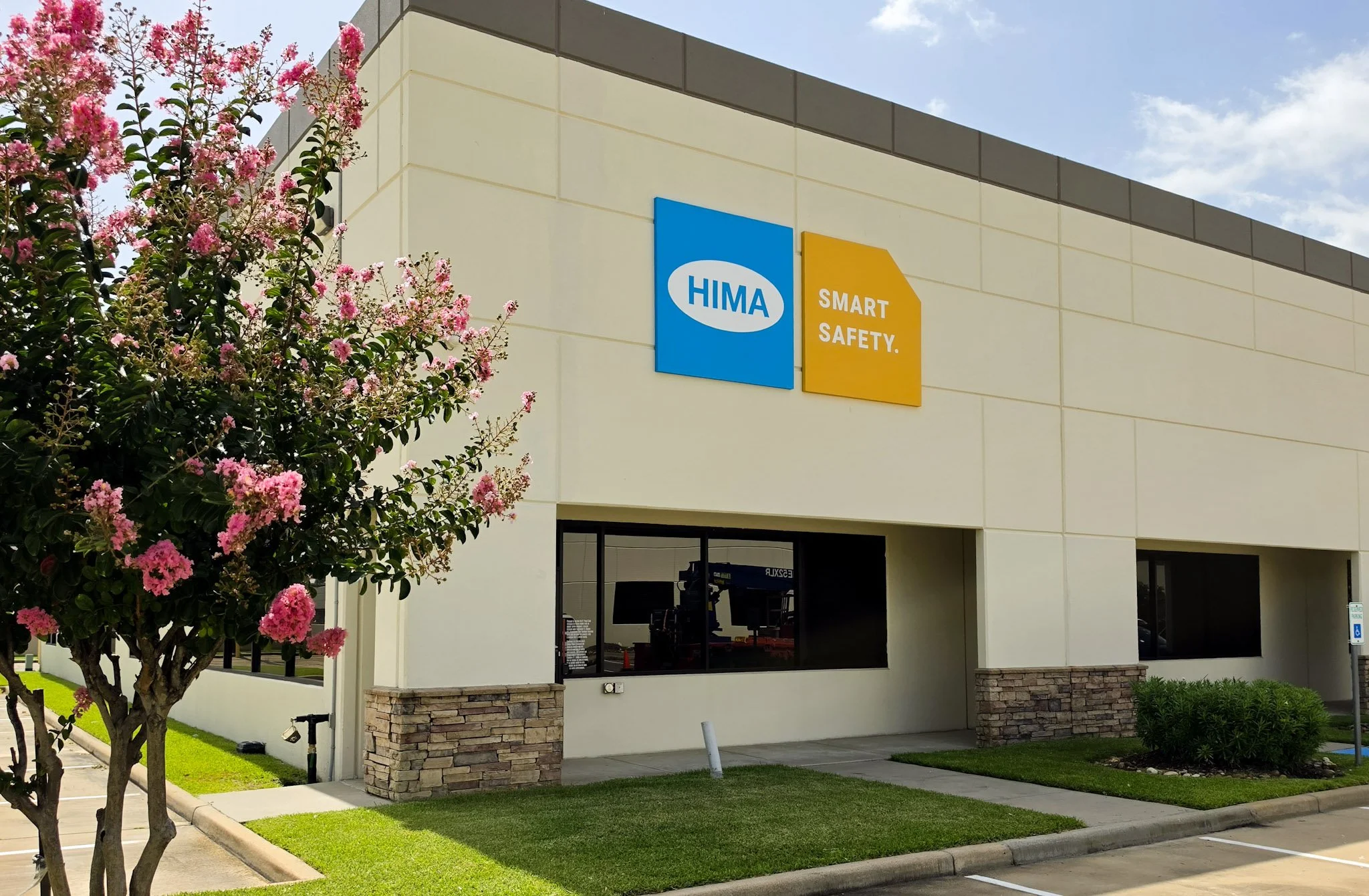
BACKPLATED WALL SIGNS
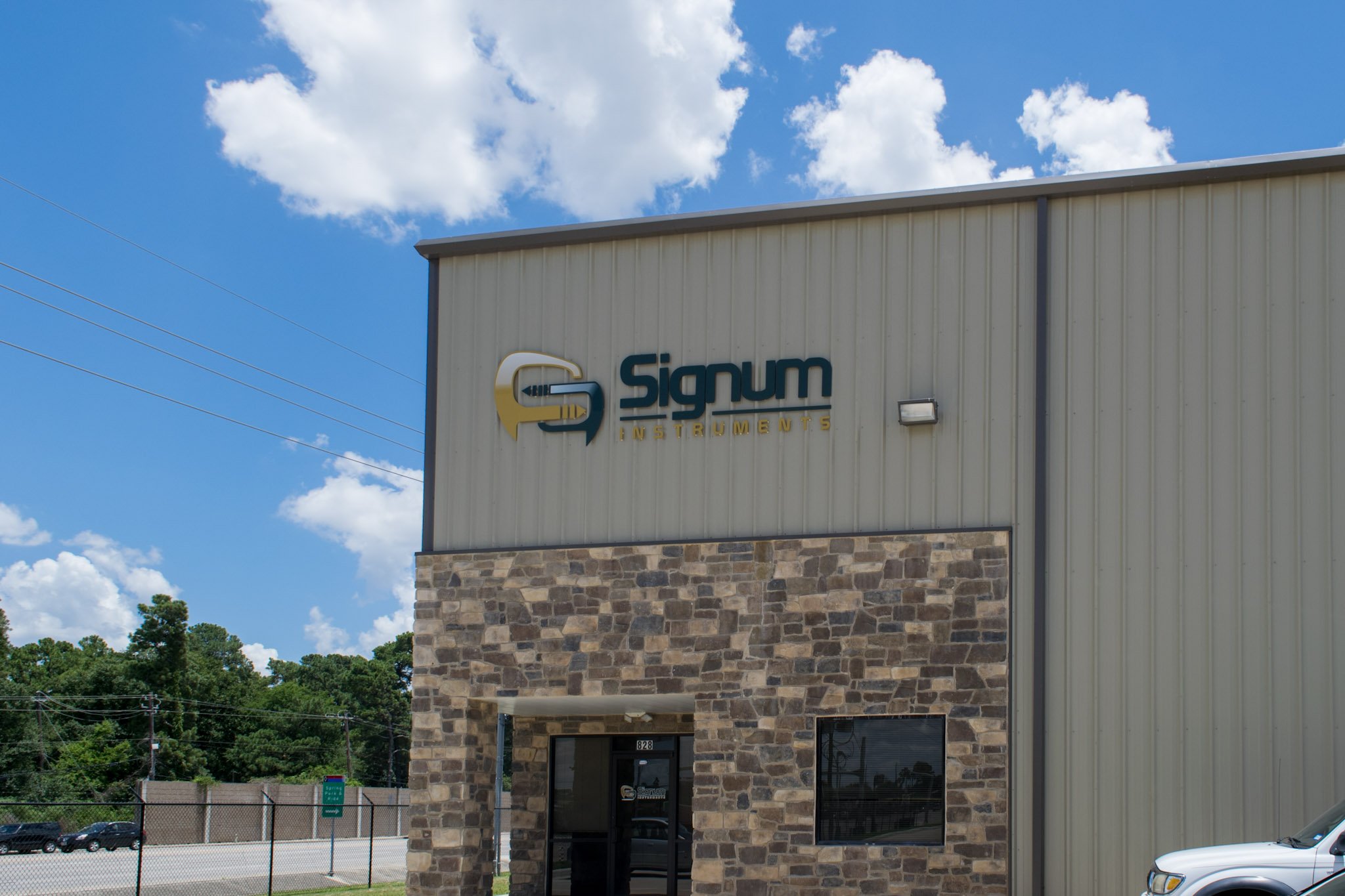
Backplated wall signs mount dimensional letters or a logo onto a solid backing panel, which then fixes to the building. The backing panel does more than frame the letters. On textured brick, seamed metal cladding, or a dark facade, individual letters become hard to pick out from the parking lot. A solid backer gives them a clean field to sit against.
Aluminum, acrylic, and stainless steel are the usual materials, finished to contrast with the wall behind. The panel also holds brand colors and graphics consistently across the whole sign, which individually mounted letters cannot always do. Panel size and lettering are designed around the expected viewing distance, so the wall signage stays legible from wherever visitors first see it.

MOUNTED METAL LETTERS
Metal letters mount directly to the facade with no backing panel, so the wall itself becomes the background. That works on flat, light, uncluttered surfaces such as smooth stucco, painted tilt wall, or limestone.
Aluminum is the most common choice, though it only holds paint if the surface is etched and primed first. That preparation is the difference between a finish that lasts a decade and one that bubbles at the edges. Stainless holds its finish in humid and industrial air and reads modern when brushed. Bronze and brass darken slowly with age. That patina is why they suit schools, courthouses, and healthcare campuses, where exterior metal signs should look established rather than new.
Flush mounting sits the letter tight against the wall. Stud mounting holds it off an inch or so, casting a shadow line that gives the sign depth.

MOUNTED ACRYLIC LETTERS
Acrylic is the practical choice when custom outdoor signs need dimensional depth without metal fabrication costs. In standard colors the color runs through the full thickness, so a scratch does not leave a pale mark.
For brand colors that stock sheet cannot match, acrylic is painted with automotive-grade coatings rated for outdoor exposure, which is what holds color through a Houston summer.
Acrylic letters mount flush to the wall or on standoffs. They are common on storefront sign work and office buildings, where the budget often has to cover more locations than metal would allow.
DIGITAL SIGNS
A digital sign replaces the message, not the sign. Schools post event schedules, municipalities run emergency notices, and churches change service times without ordering new panels.
Outdoor LED signs run from small message centers to large format signs built into a monument or pylon face. Pixel pitch, the spacing between the LEDs, determines how close someone can stand before the image breaks into dots. A display read from the road can use wider spacing than one at an entrance, which also costs less.
Content updates from a computer or phone. The practical question is who will manage the content after installation, and that's worth deciding before the display is specified.
DIRECTIONAL SIGNS
Directional signs are bought as a set, not one at a time. The number you need matches the number of decisions a driver makes between the street and a parking space. Which entrance, which building, where to park.
We map that sequence before quoting, because a sign at the wrong decision point is worse than no sign at all. Directional signs bridge the gap between the monument at the street and the building sign at the door. Schools, hospitals, and industrial campuses usually need more of them than owners expect.
Aluminum and ACM handle most exterior work. Reflective finishes help signs read from moving vehicles after dark, and non-reflective finishes work where headlights are not a factor. ADA-compliant parking signage follows federal accessibility requirements, not preference.
CHANNEL LETTERS
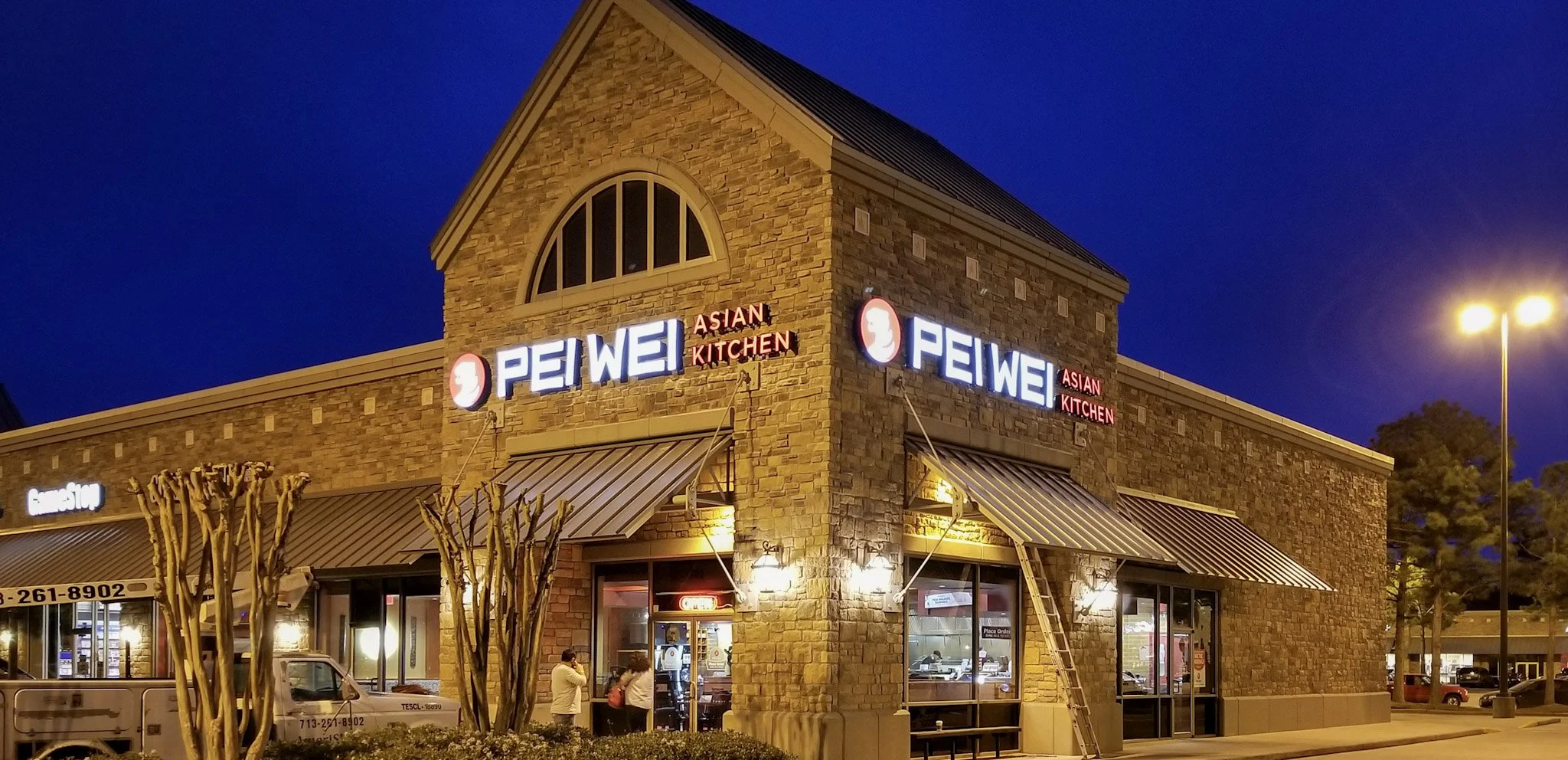
Channel letters are individual illuminated letters, each with its own internal lighting. They are the standard for storefront signs on retail centers, restaurants, and hotels, where the sign needs to be seen from passing traffic and after dark.
Front-lit letters push light through a colored face and carry the furthest, which is why retail favors them. Halo-lit letters block the face and throw light back onto the wall, leaving a glowing outline. That effect is quieter and suits offices and medical buildings.
Letters attach straight to the wall or onto a raceway, a painted enclosure holding the wiring and power supplies. A raceway means one wall penetration instead of many and makes future service faster. Direct attachment looks cleaner but needs more penetrations and closer coordination. Today's LED systems are more energy efficient than the tube lighting they replaced and need less attention over the life of the sign.
PYLON AND POLE SIGNS
A pylon sign does the same job as a monument, from higher up. Some sites need that height. A property set back behind a parking lot can lose a ground-level sign entirely. So can one fronting a road where traffic moves fast.
Height is the reason to choose a pylon. It is also what local codes restrict most tightly on outdoor business signage. That ceiling is confirmed before design starts, because it sets cabinet size and how many tenant panels will fit.
Multi-tenant pylons need planning past today's roster. We size panels around the spaces you expect to lease, so adding a tenant later means a new face instead of a new sign.
What Houston Clients Say About Our Outdoor Sign Work
OnPoint
“Our company hired Saifee Signs & Graphics to redo our building signs. Not only did they do an amazing job, their pricing was the most favorable among two other companies. Our sign stands out during the day and shines beautifully at night with the halo lighting of the sign.”

Vyrian
“The best! I cannot speak more highly of Saifee Signs. We were impressed with how professional Ali and his team were when they first made a sign for us several years ago. When it was time to get another one, they were the ONLY company we called.”

EndoQuest Robotics
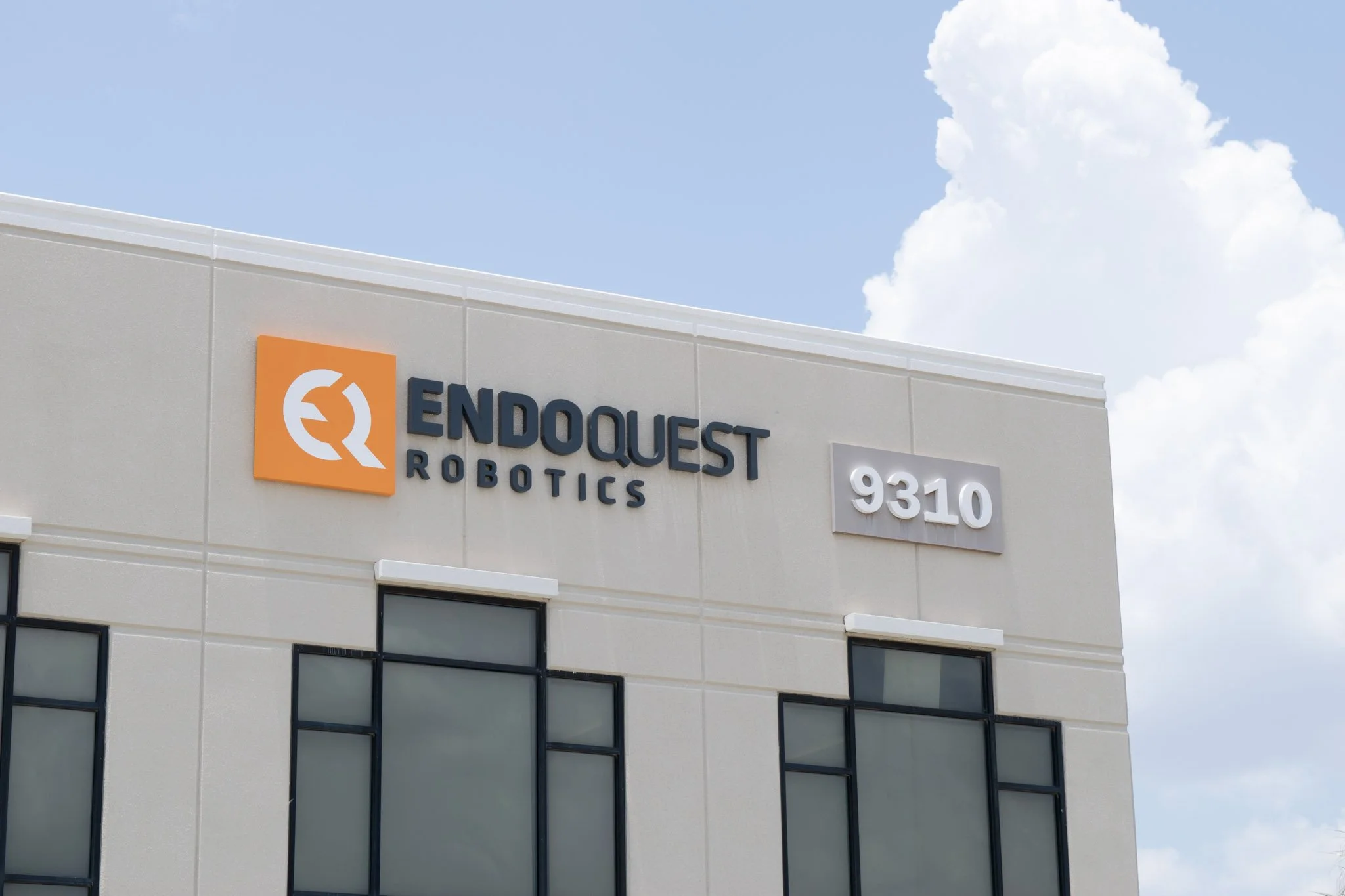
“Saifee signs did both an interior and exterior sign for us. It takes a lot of time, planning, and correspondence to do custom signs but it's worth it. Our employees kept coming out to take pictures of the installation and final product. Everyone is happy with the end results.”

Commercial Sign Installation in Houston
Commercial sign installation is planned alongside the rest of the project, not treated as a separate step at the end. The person who coordinated your drawings and approvals also schedules the work and sees it through final inspection. Installation questions get answered during planning, not on the day the crew arrives.
Installation is usually where the schedule gets decided. Inspection requirements vary by jurisdiction, but exterior signs are almost always checked at more than one stage. Ground signs often require a footing inspection before concrete is poured. Illuminated signs are inspected before they ship and again once they are energized. We build those checkpoints into the schedule from the start, so they stay part of the timeline instead of interruptions to it.
We plan around your operations rather than ours. Lift equipment and lane closures are scheduled in advance, and installations that would disrupt a storefront or a clinic get moved outside business hours. Site access is confirmed with your property manager or general contractor before work begins. Most building signage problems are solved on paper, well before anyone arrives on site.
Outdoor Sign Repair and Maintenance
Exterior signs all need service eventually. Heat, humidity, storms, and years of daily operation wear on outdoor signs, and most problems turn out smaller than they look from the ground.
We service the signs we supply and install, and we also repair signs we didn't build.
When an illuminated sign goes dark, the driver or power supply is the usual cause rather than the LEDs. Faces crack, letters work loose, and finishes fade. Older fluorescent building signage can be retrofitted to LED, often at lower operating cost than repairing what is there. When a sign develops the same problem more than once, we look past the failed component and inspect sealants and drainage before replacing additional parts.
Outdoor business signs that stay unlit cost you visibility every night, so those repairs move quickly. Send us a photo of the problem, and we can often identify the likely cause before scheduling a visit. That means arriving with the right parts on the first trip. Storm damage and anything affecting safety moves to the front of the queue.
If a sign is no longer worth repairing, we'll tell you. You'll have the reason, the replacement options, and the costs in hand before you decide.
Warranty: Warranty terms are specified for each project and included with every quote. Applicable manufacturer warranties on electrical components are provided where appropriate.
Recent Outdoor Sign Projects in Houston
Click the image to view the page
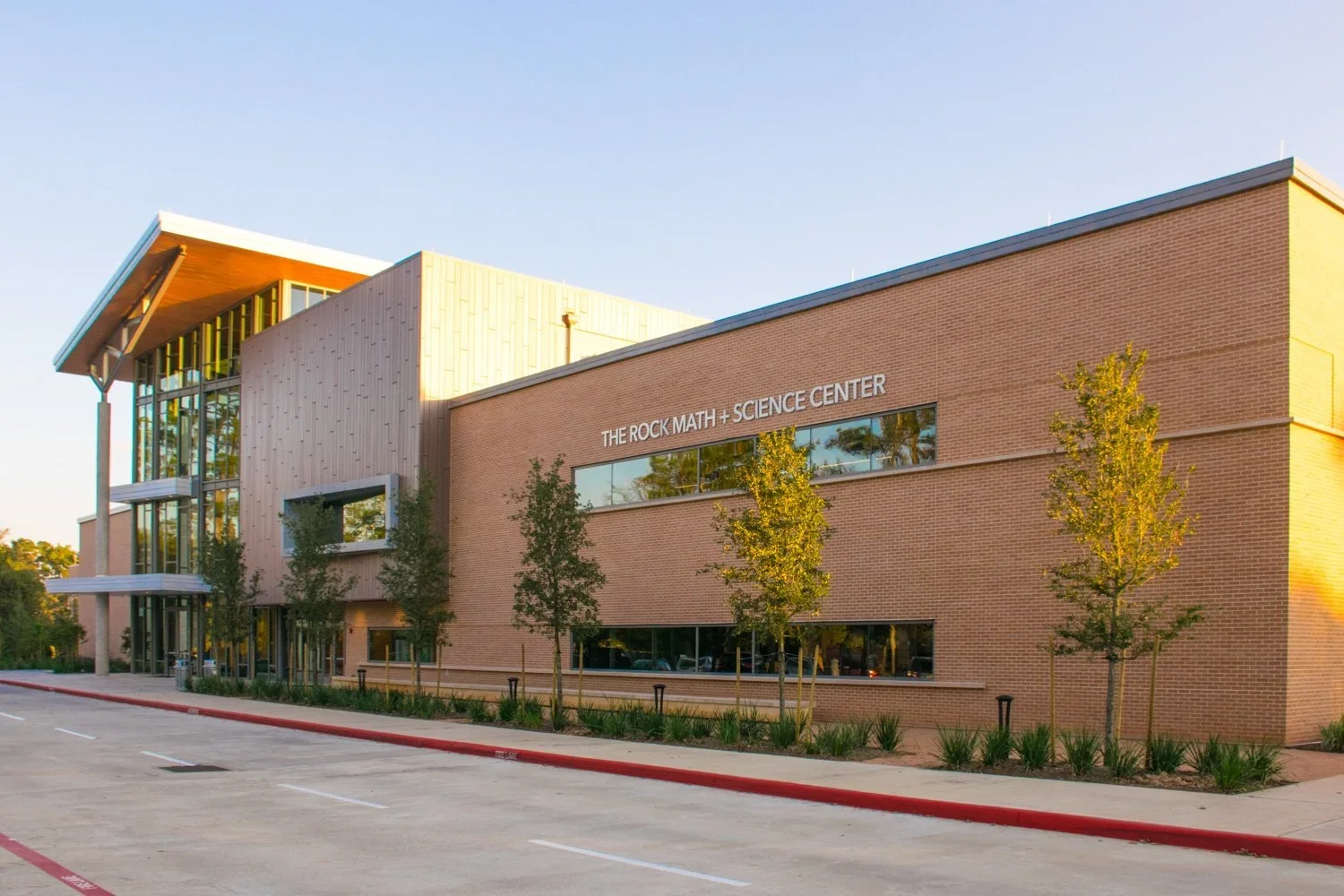
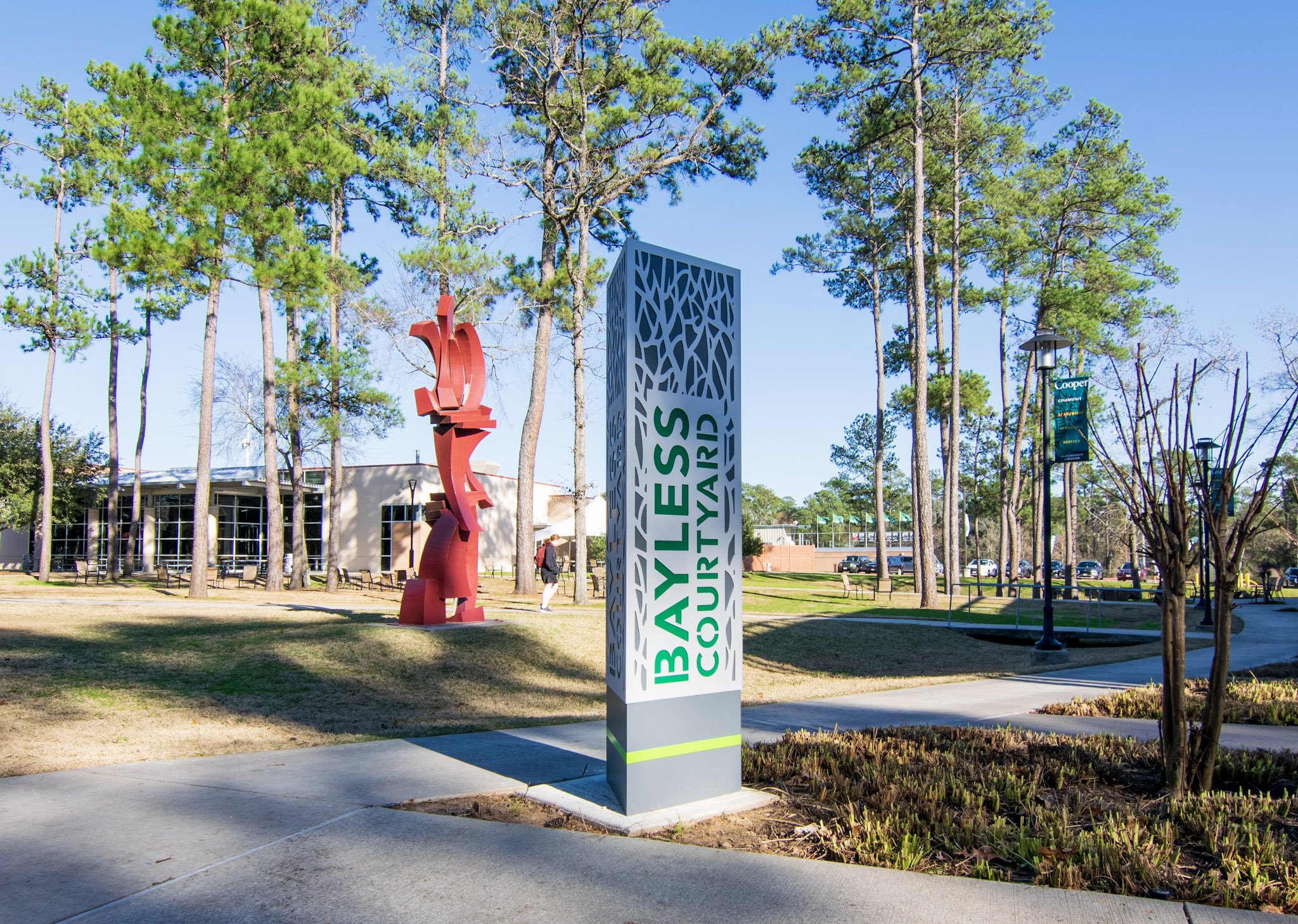
The John Cooper School
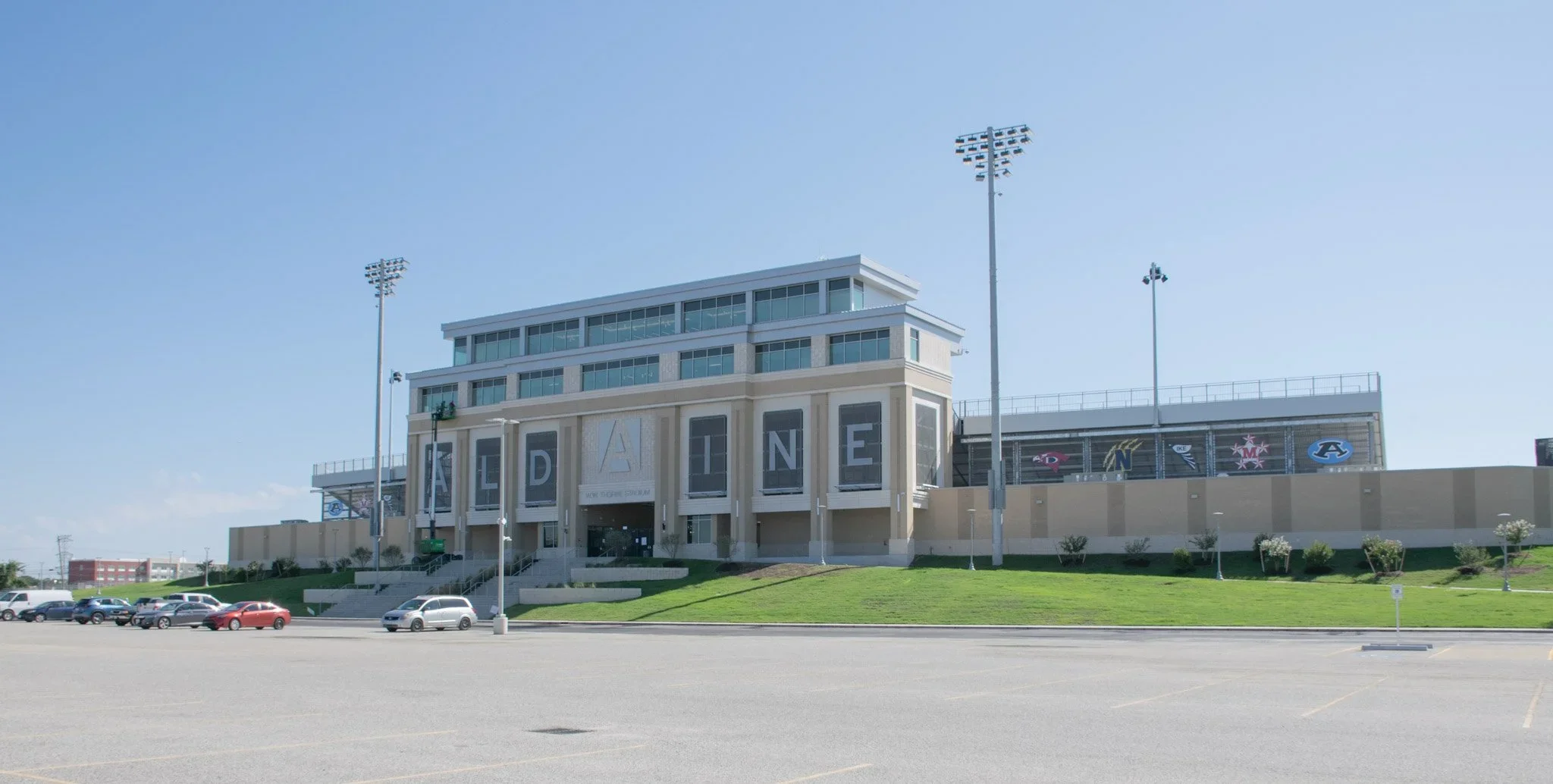
W. W. Thorne Stadium, Aldine ISD
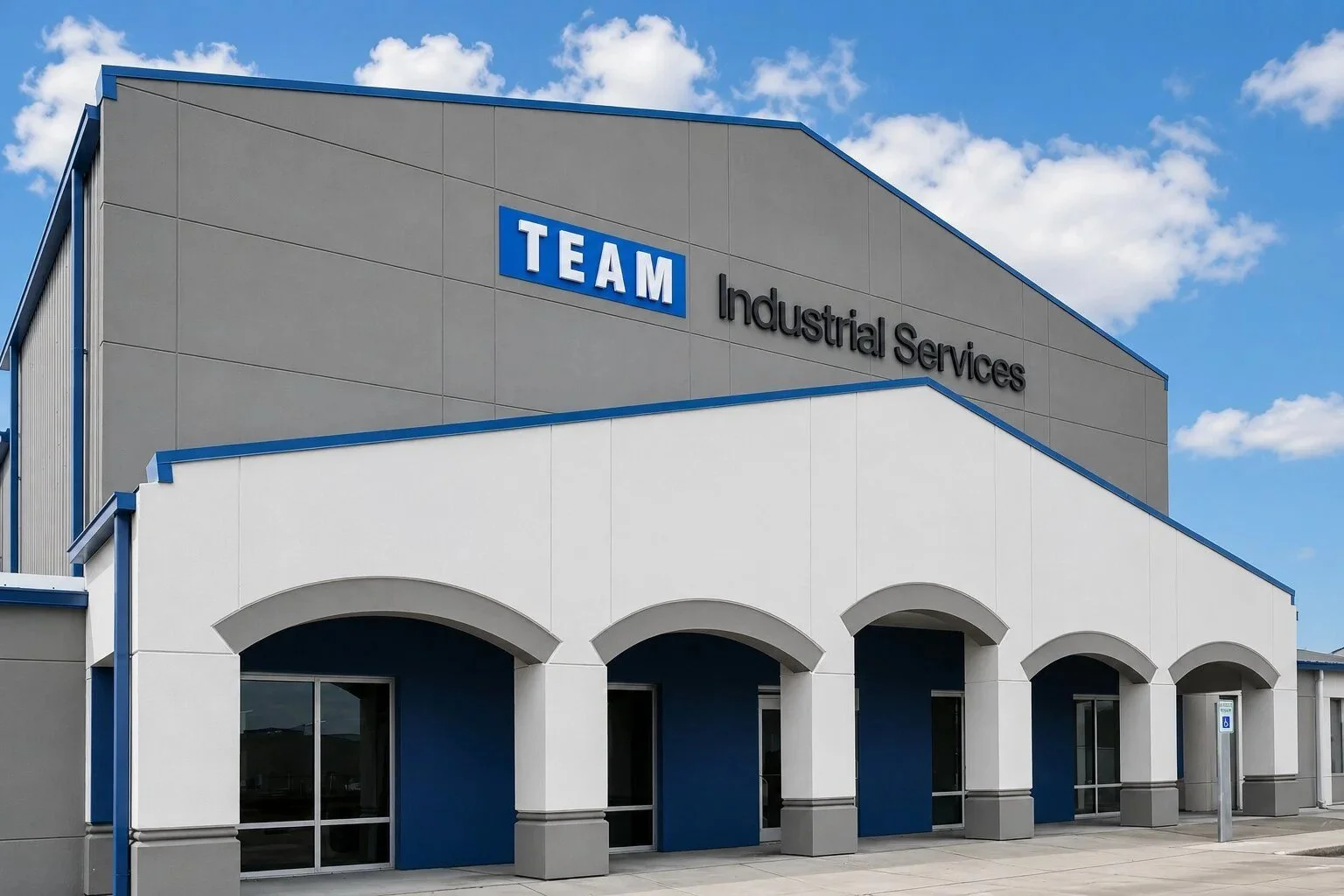
Team Industrial Services
Outdoor Building Sign Questions Houston Property Owners Ask
-
Start with the route rather than the sign. Trace the path a first-time visitor takes from the road to your front door, and mark every point where they have to make a choice. Those points are where signs earn their cost.
Most Houston properties land on a similar pattern. A monument or pylon at the street, scaled to the speed of passing traffic. Channel letters or a building sign at the entrance. Directional signs wherever the route forks.
Which of those you actually need comes down to how many choices your visitor faces, and how far away each one has to be readable from.
-
The cost of outdoor building signs in Houston depends more on installation access, illumination, and engineering than on the size of the sign. Two signs with identical dimensions can price very differently depending on how hard one is to reach.
A wall sign on a single-story storefront needs a lift and a few hours. The same sign four stories up needs engineered drawings, an electrical run, and traffic control. The sign looks similar when it is finished. Getting it there does not cost the same.
Material moves the number too. Bronze and stainless cost more than painted aluminum at the same dimensions. Permitting and electrical work add line items of their own, and both are predictable once the address and sign type are known.
Quantity works the other way. Six signs planned together usually cost less per sign than six ordered separately, because one survey and one installation window cover all of them.
Every sign we build is custom, so we price from the property rather than a catalog. A few photos and the address are usually enough for us to come back with a realistic range on exterior signs of any type.
-
Yes, in most cases. Faces, panels, lettering, and graphics can usually be changed while the existing structure, foundation, and electrical stay in place, which is why rebranding rarely means starting over.
Two things force a full replacement. The first is the part you cannot see: a cabinet with corroded seams, a foundation sized for a smaller sign, or wiring that no longer meets code. The second is fit. A sign can be structurally sound and still be the wrong size, wrong position, or wrong style for where the brand is heading.
Updates go through permitting too. In Houston, face changes have their own application category rather than being treated as new signs, which usually makes the review lighter. It still belongs in the schedule before artwork is finalized.
If you are rebranding several locations, we look at all of them together. Some will need only new faces, and others have reached the point where replacement is the better long-term investment. Evaluating every site before artwork is locked keeps one location from holding up the rollout.
-
Most of an outdoor building sign project is approvals, not fabrication. Design revisions, landlord sign-off, permit review, and engineering all run ahead of the shop. Material lead times can stretch it further, especially on custom cabinets or specialty finishes. Commercial sign installation is often the shortest phase of the whole job.
That order matters when you are working to a date. A sign ordered late cannot be pushed through a permit queue any faster, and fabrication cannot begin until drawings are approved. Compressing a schedule usually means compressing the wrong end of it.
Starting early is what buys you room. Sight lines, power runs, and mounting locations are cheap to solve on paper and expensive to solve on site.
-
Usually, yes. Most Houston commercial properties end up with two or three: identification at the street, identification at the building, and directional signage between them.
A sign built to be read from the road cannot carry the detail someone needs at the door. One built for the door disappears from the road. Trying to make a single sign do both usually compromises both.
Smaller sites with a visible entrance directly off the street are the exception. If a driver can see your door from the road, one well-placed sign may be all you need.
-
The clearest signal is that people still ask where you are. Visitors calling for directions, arriving at the wrong entrance, or deliveries landing at the wrong door all mean your outdoor signs are not doing their job. Condition is not the only measure of whether a sign still works.
Other signals arrive slowly. LEDs dim a little each year, so a sign that looked bright five years ago can read as dull beside a neighbor's. Trees and new construction grow into sight lines a few feet at a time. A rebrand can leave an old logo on the building long after everyone inside has stopped noticing it.
Site changes count as much as sign changes. A new entrance, a repaved lot with different traffic flow, or a building addition can leave signage directing people along a route that no longer exists.
Drive up at night from the direction most of your visitors come from. Most of what that trip reveals is fixable without replacing anything.
-
The biggest mistakes are not made during fabrication. They are made months earlier, while decisions that constrain the sign are still being taken by other people.
The most common ones:
Waiting until late in construction to begin signage planning
Approving artwork before reviewing landlord sign criteria
Sizing a sign for how it looks on a drawing rather than how it reads from the road
Designing only for today's layout instead of future tenants and entrances
Treating signs as separate purchases rather than one wayfinding system
Each is cheap to avoid and expensive to correct. Landlord criteria can dictate letter height, illumination type, and whether a raceway is permitted at all. A pylon sized to today's tenant roster needs a new cabinet the first time a space turns over.













From Downtown to all across H-Town!
Saifee Signs can permit and install Outdoor Signs in and around the Greater Houston metroplex
Houston | Texas Medical Center | The Woodlands | Conroe | Tomball | Cypress | Katy | Richmond | Sugarland | Pasadena | Clear Lake | La Porte | Baytown | Humble | Kingwood