
ONE CONTACT FROM THE DRAWING TO THE FINAL INSPECTION
Custom Monument Signs for Houston Businesses
Material choice is usually the easy part of a monument sign project. What slows it down is permitting, engineering the foundation to meet Texas wind-load requirements, and coordinating masonry and installation around an occupied property.
Saifee Signs handles all three. Since 2004 we have designed, fabricated, and installed monument signage for offices, schools, medical campuses, and apartment communities across the Houston area.
Send us the property address and a photo of the entrance, and we will come back with a recommended direction and a budget range. Or scroll down to see recent Houston monument sign projects.
TYPES OF MONUMENT SIGNS
MASONRY
BRICK
STONE
ARCHITECTURAL FOAM
METAL
ILLUMINATED
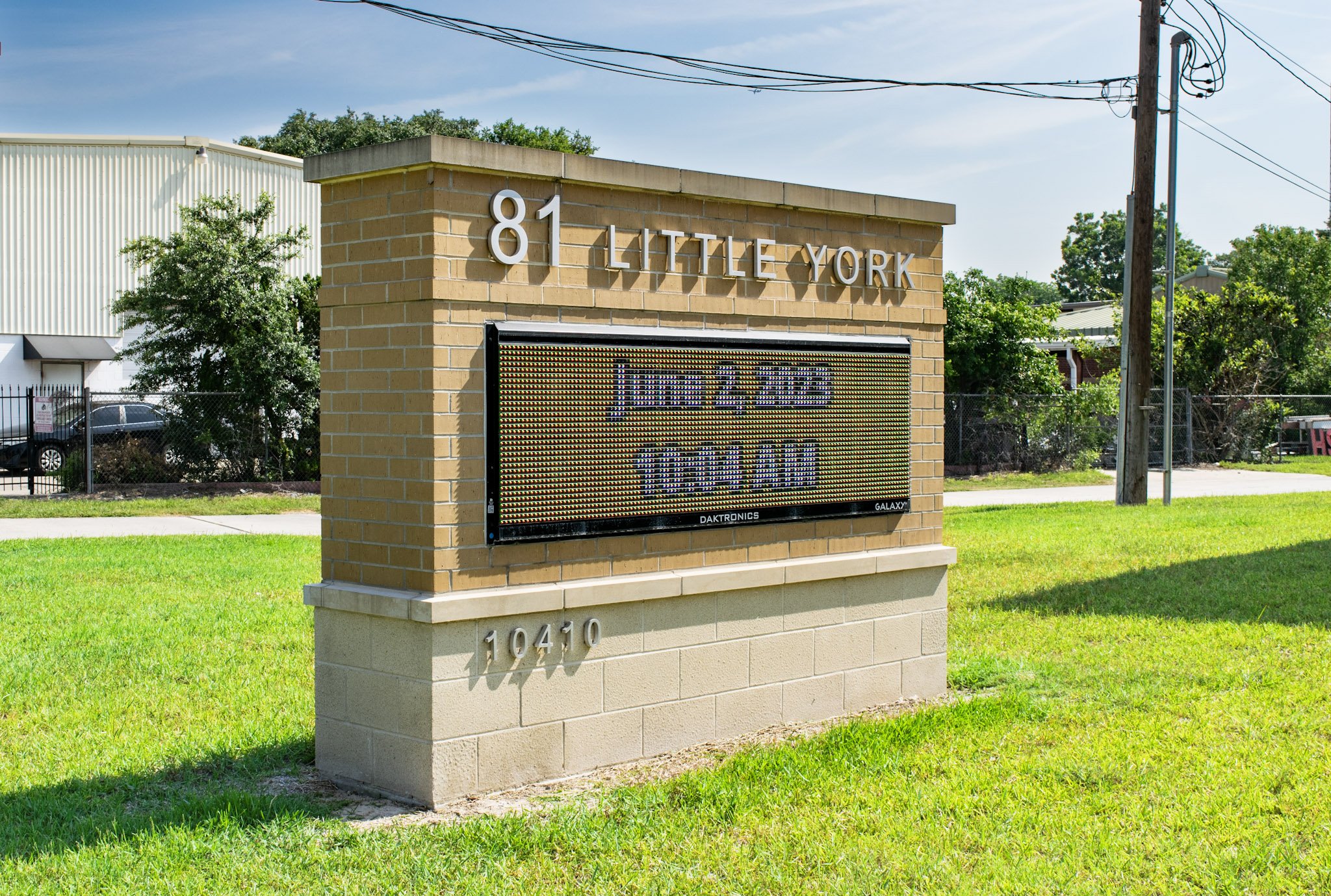
ELECTRONIC MESSAGE CENTER
MULTI-TENANT
Monument Signage Types and Materials
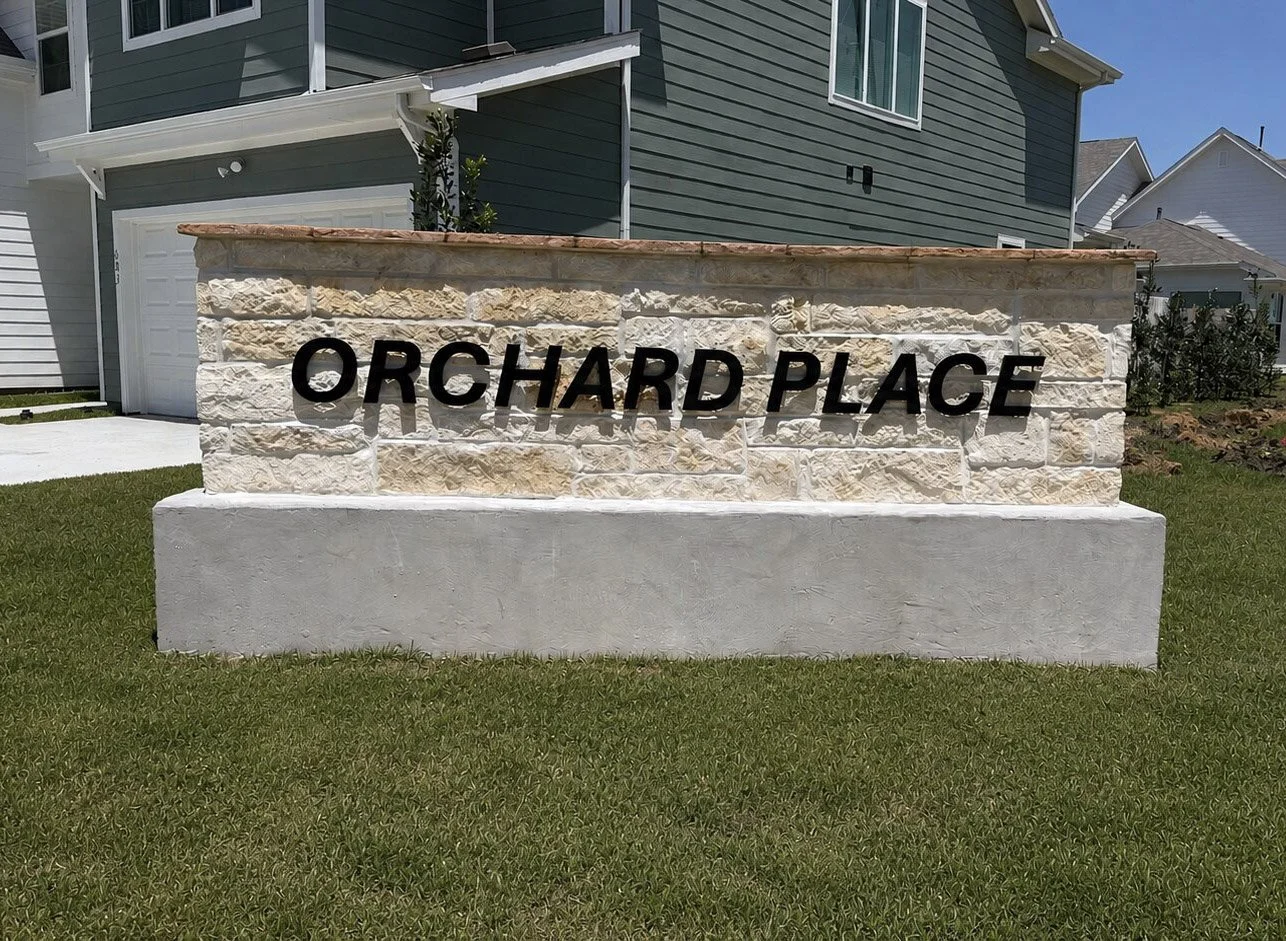
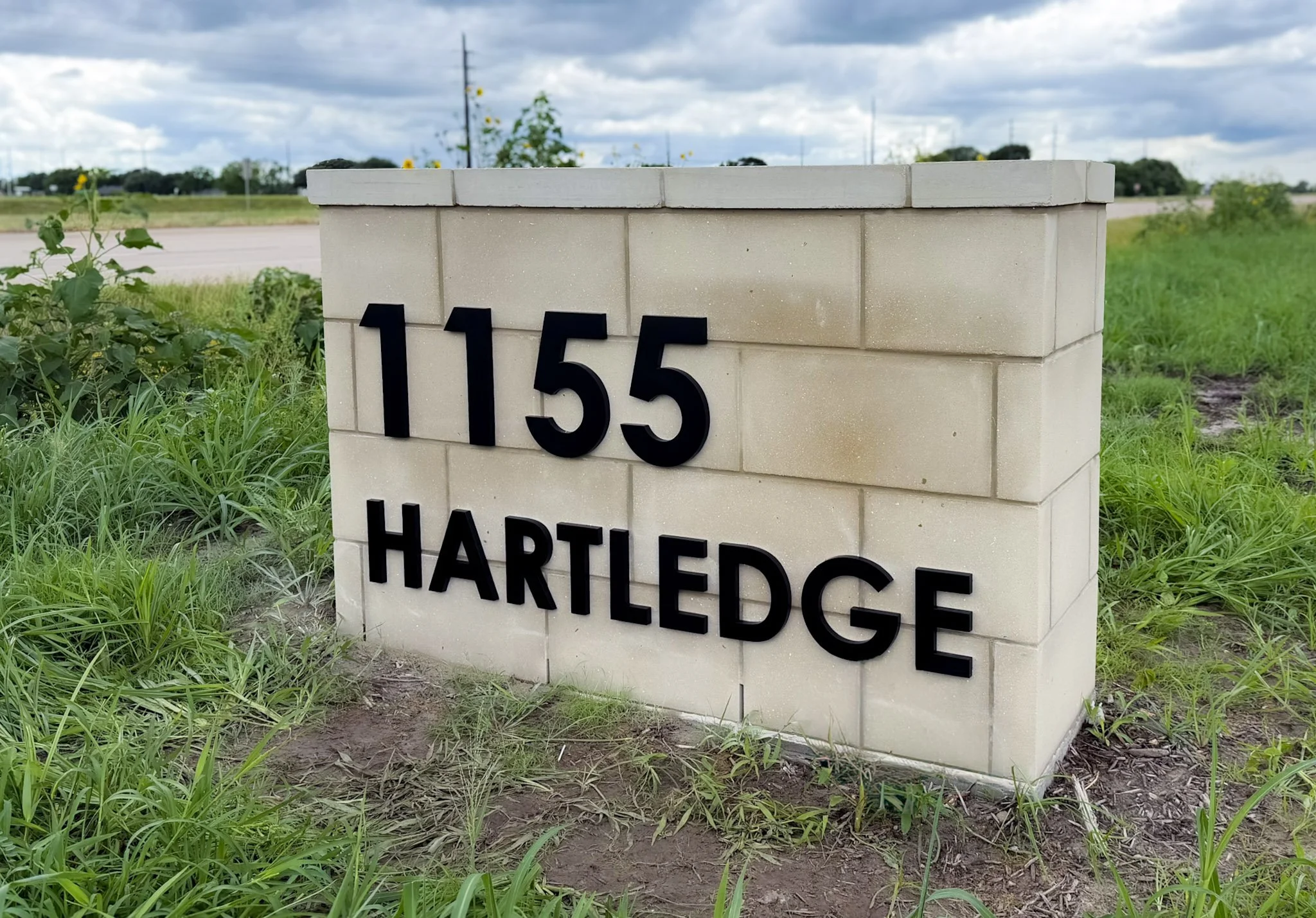
A monument sign is a freestanding structure set at ground level, so the material you choose drives the budget and the schedule more than the design does. Most are masonry monument signs built from brick, stone, or cast concrete, chosen when the sign is meant to become a permanent part of the property. They also carry the longest timeline: excavation, a poured footing, cure time, and a mason on site before any sign elements go on. The trade-off is permanence, so a rebrand three years out means demolition rather than a reface. When a monument is already in place, refacing is often the more practical investment. We fabricate and install cast metal, aluminum, stainless steel, or acrylic letters onto an existing structure, which skips the excavation and foundation work entirely.
Material is only half the decision. New monument signs begin with an engineered concrete foundation, sized from the sign's height, its weight, and how much face area catches wind at that location. Those drawings go into the permit package before construction begins, with the foundation designed for Gulf Coast wind conditions instead of a generic standard. Masonry, permitting, fabrication, and installation all run under a single contract, so you deal with one company rather than three.
Lighting a Monument Sign
Illumination depends on traffic after dark rather than on business hours. An office that closes at five is still on a road at seven, and an unlit monument sign is invisible to everyone driving past. Lighting adds cost, and most of it is not the fixtures. Power, trenching, and additional permitting are where the money goes. The lighting method depends on how the monument sign is viewed. Halo-lit letters suit signs read from close range at the entrance, where light thrown back onto the backing reads softer. Push-through acrylic is often the better choice along faster roads, where the illuminated face stays legible from a greater distance. Ground-mounted fixtures light the monument as a whole and are the usual choice when adding illumination to an existing sign, since retrofitting internal lighting often means rebuilding the structure.
The harder question is power. If no conduit runs to the monument location, someone has to trench it, coordinate access with the property owner, and often permit the electrical work separately. We run a site survey before design begins. Catching a power problem on paper costs a drawing revision, while catching it after fabrication costs a change order and weeks of delay.
How a Monument Sign Project Runs
A monument sign takes longer than most buyers plan for, and the permit is usually why. City review cannot begin until the design is final and the engineered drawings are stamped, and that calendar belongs to the municipality rather than to us. What we control, we move on fast. A week saved getting the application filed is a week off the finish date. We then track the review, respond to comments, and tell you where it stands instead of leaving you to ask.
Once the permit clears, fabrication and site work can run in parallel. Installation is timed around your operating hours. A monument sign sits at the driveway entrance, and that entrance cannot be closed during a school pickup or a clinic morning. Most permits require a final inspection after the sign is installed, and we schedule that as well.
From Houston Businesses, Campuses, and Corporate Clients
Lam
“Saifee Signs recently created exterior signage for two of our retail stores and we couldn't be happier with the results. Communication was prompt and clear. Renderings and the willingness to collaborate/modify made it easy to envision the concept.”

Vyrian
“The best! I cannot speak more highly of Saifee Signs. We were impressed with how professional Ali and his team were when they first made a sign for us several years ago. When it was time to get another one, they were the ONLY company we called.”

University of St. Thomas
“Fantastic experience! Saifee Signs have done numerous projects for us and always goes above and beyond to make sure each one come out perfect! They are always professional and quick to respond. I couldn't be happier with the results. 10/10, highly recommended!”

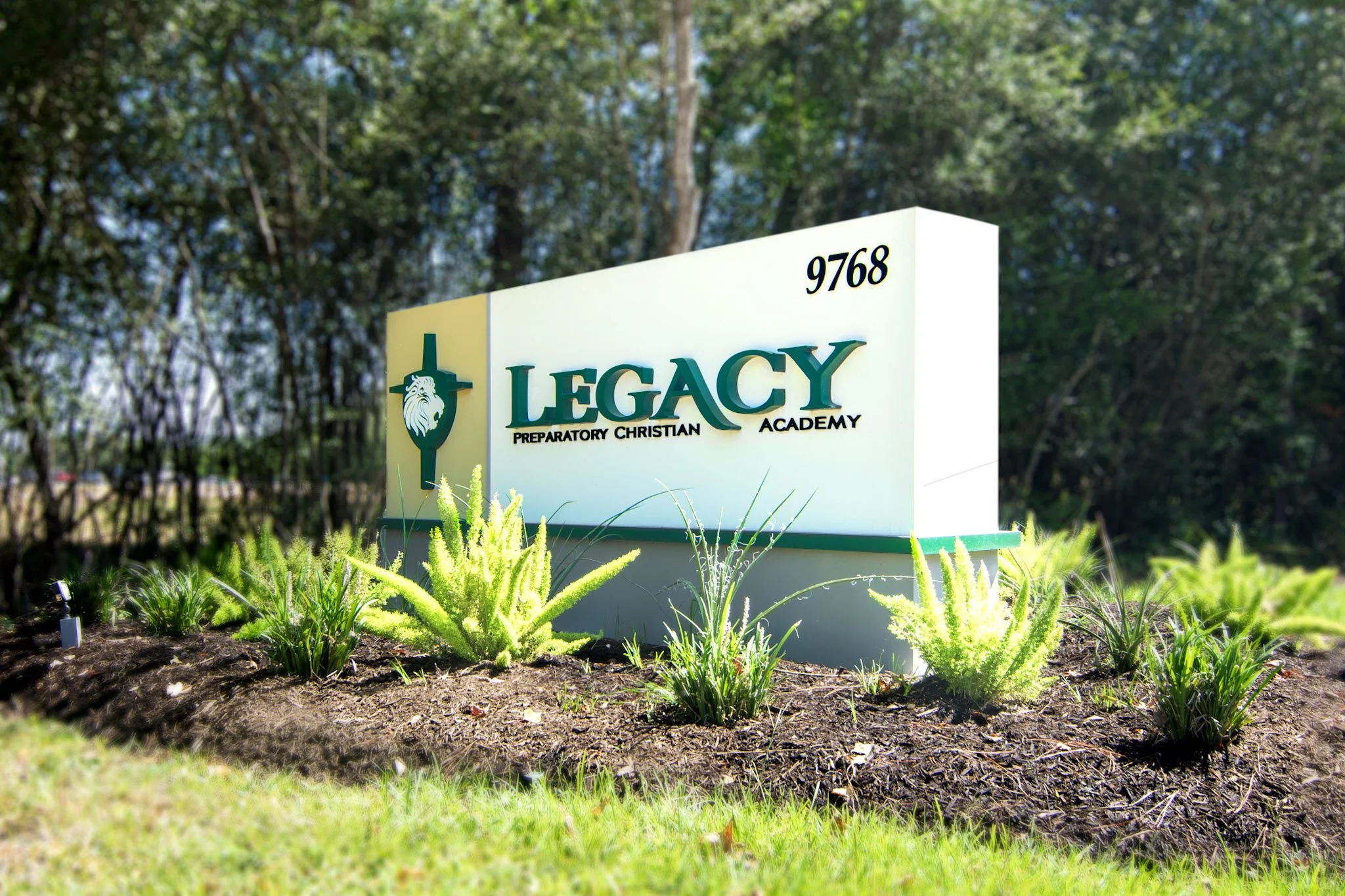
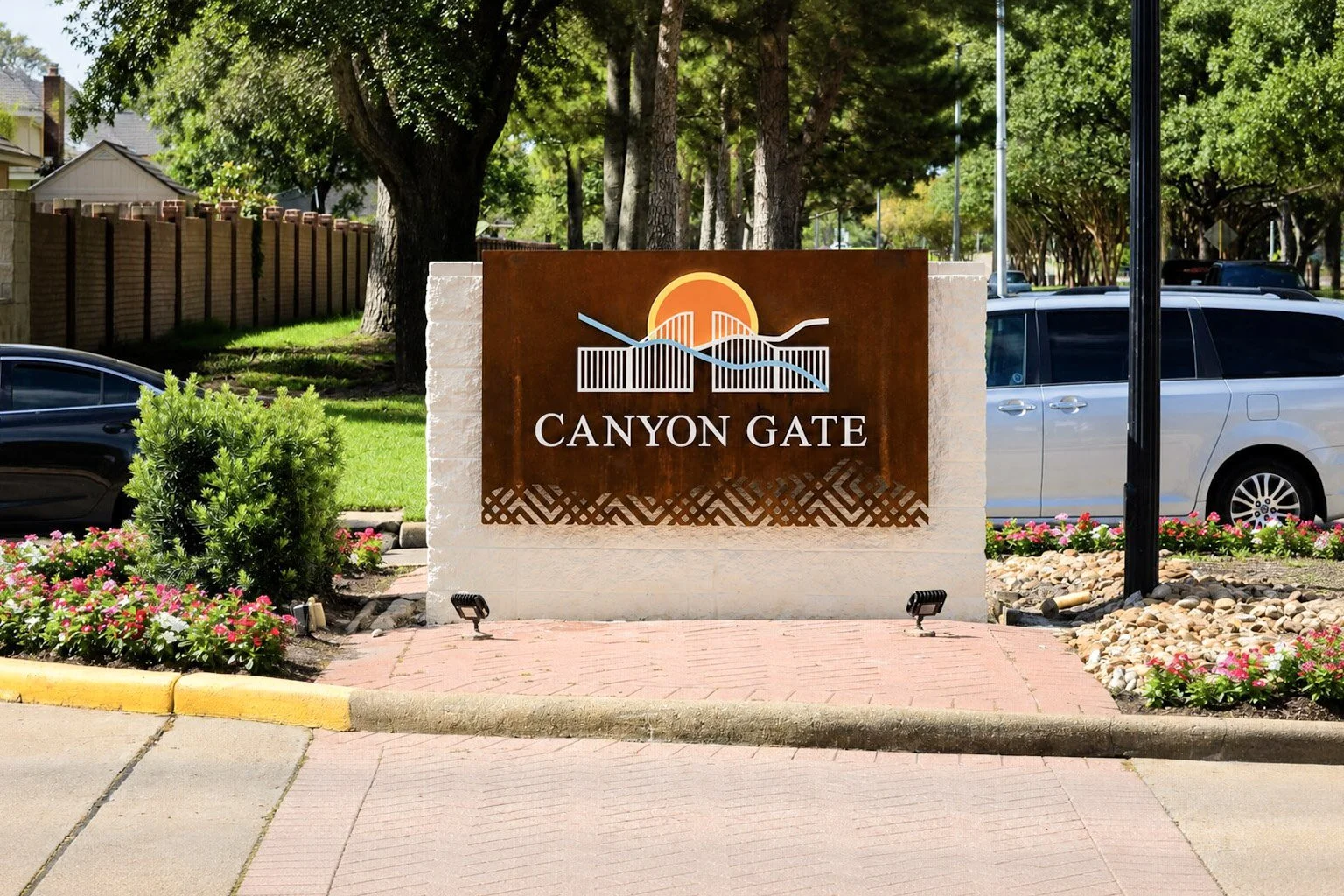
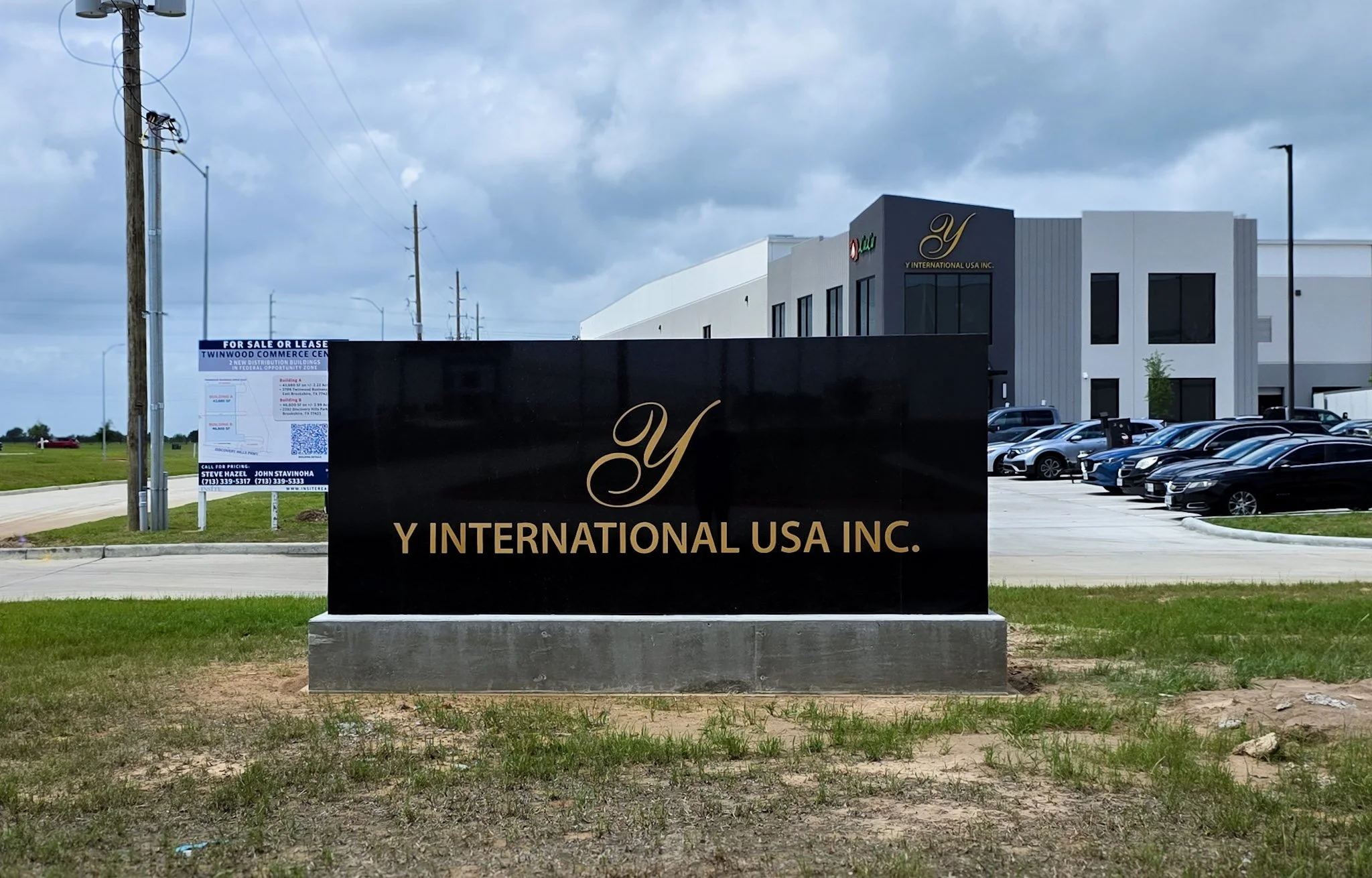
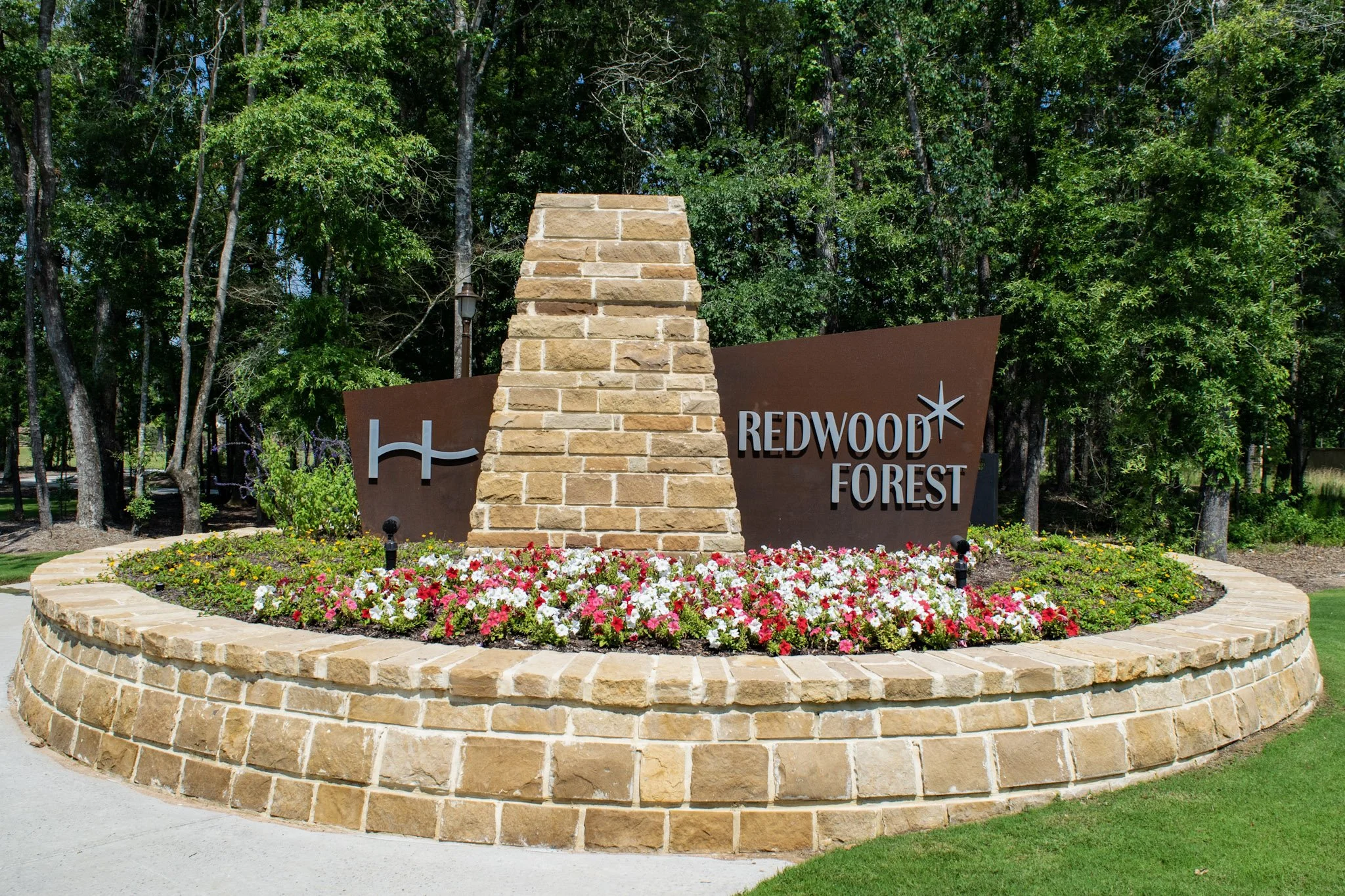
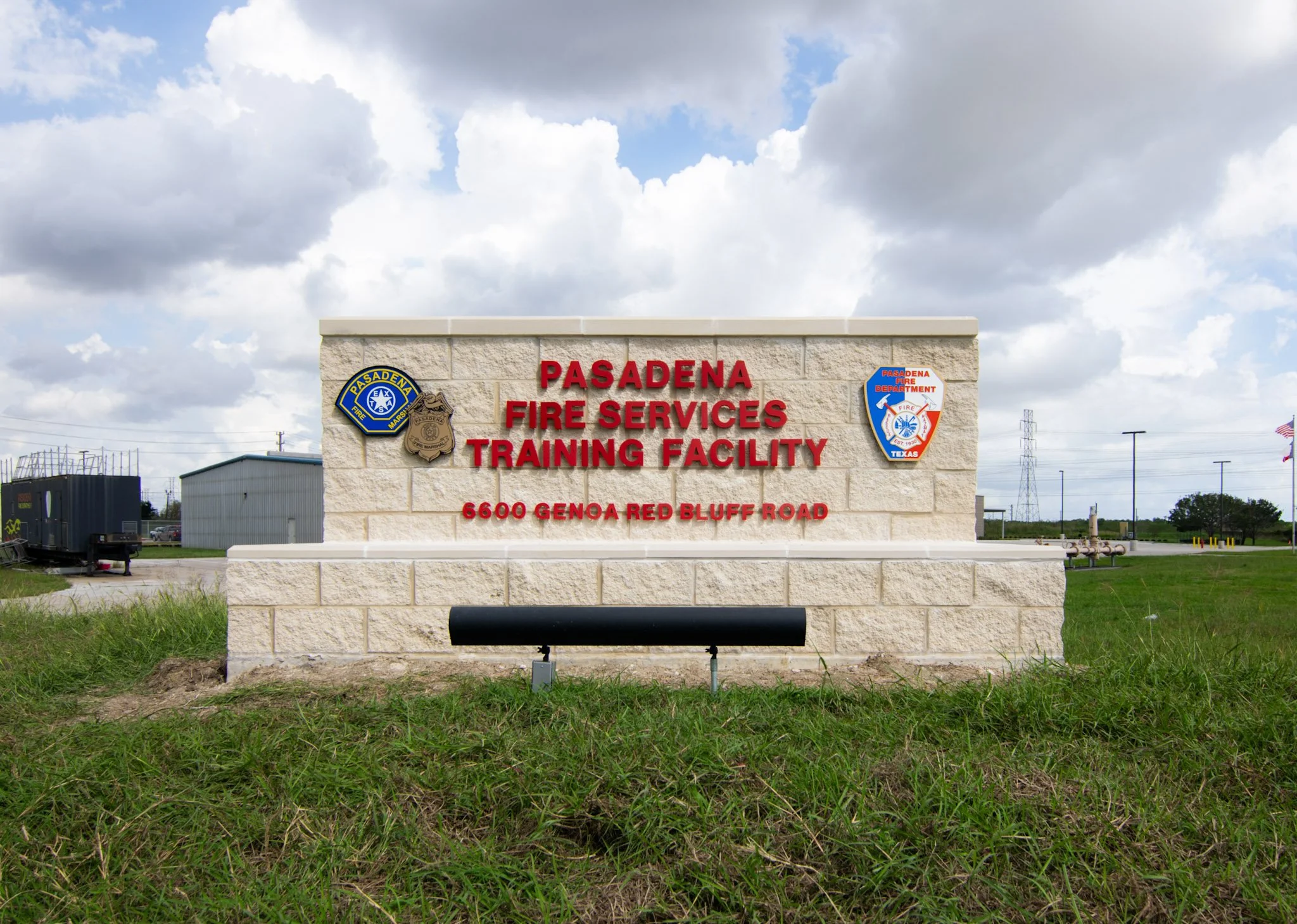
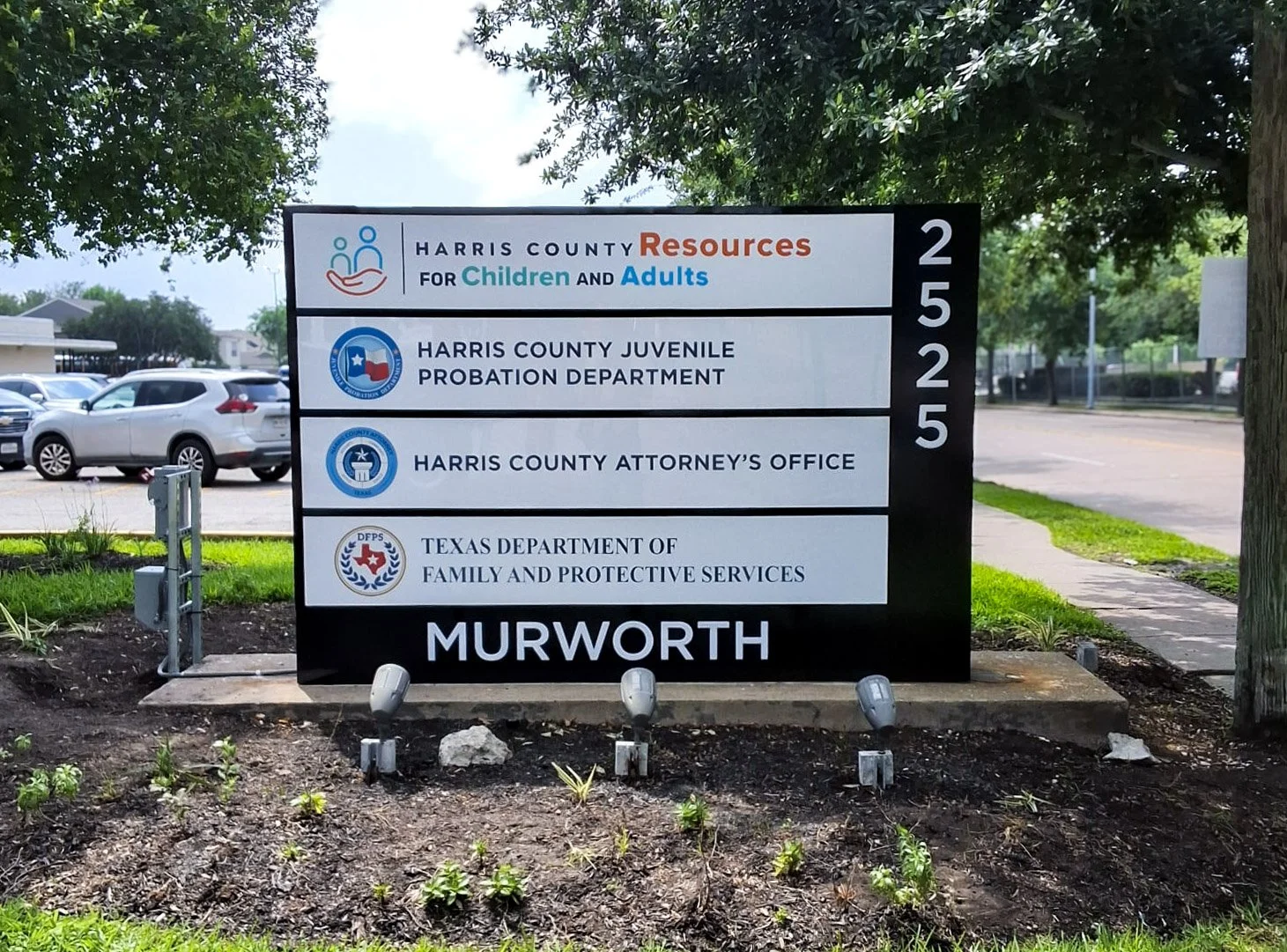
Monument Sign Examples
View our previous work






Common Monument Sign Questions
-
Commercial monument signs generally run between $2,000 and $30,000 installed. The low end is dimensional letters mounted to a brick monument that already stands on the property. The high end is a new masonry structure with an electronic message center.
On a new build, site preparation is the first major cost. The site has to be excavated, a footing poured, and, where there is no conduit, power run to the location. Permit fees and engineered drawings add to that total. We price the scope you describe, and if the site adds anything, we tell you before you see it on a bill.
-
The difference is height and structure. Monument signs are solid forms built at ground level, usually masonry or a fabricated base. A pylon sign is a cabinet raised on one or more poles, clearing parked cars, landscaping, or a building standing between the sign and the road.
Viewing distance and traffic speed decide which one fits. A property set back from a freeway or fronting fast traffic needs the height a pylon gives you. A property with an entrance drive off a surface street does not need that height, and a monument blends into the landscaping and the building line. Street classification and deed restrictions often settle the question anyway, since many jurisdictions limit pole signs. If a pylon suits your site, we build those too.
-
Almost always, and a permanent monument sign installed without one can draw fines or an order to remove it. Houston has no conventional zoning, so street classification does the work zoning does elsewhere. The category of the street your sign faces determines the height, size, and lighting allowed. Scenic and historic districts add their own limits on top of that. If the property sits in unincorporated Harris County or one of the surrounding municipalities, the requirements and the review process are different. Deed restrictions, landlords, and architectural review committees often require approval of their own. That private track is the one buyers tend to miss.
Houston issues sign permits only to licensed sign contractors, and we hold that license. We file the application on every project. An illuminated monument sign needs its own electrical permit, including a shop inspection before installation and a final inspection once the sign is energized. City review usually finishes in under four weeks, and the delay, when there is one, comes from the work that has to happen before filing.
-
Always. Every monument sign gets a scaled rendering showing the structure, materials, lettering, and colors in place on the property before anything goes into fabrication.
The engineering runs alongside it. Stamped foundation drawings are finished before anything is built, not worked out after the sign is already in production. That is what the city reviews, and it is why the permit cannot be filed until you approve the design.
We do not cap the number of revision rounds, and we keep refining until you approve it. A monument built to the wrong drawing costs far more than one more drawing. If you have no logo or brand standards to work from, we can develop those as part of the design.
-
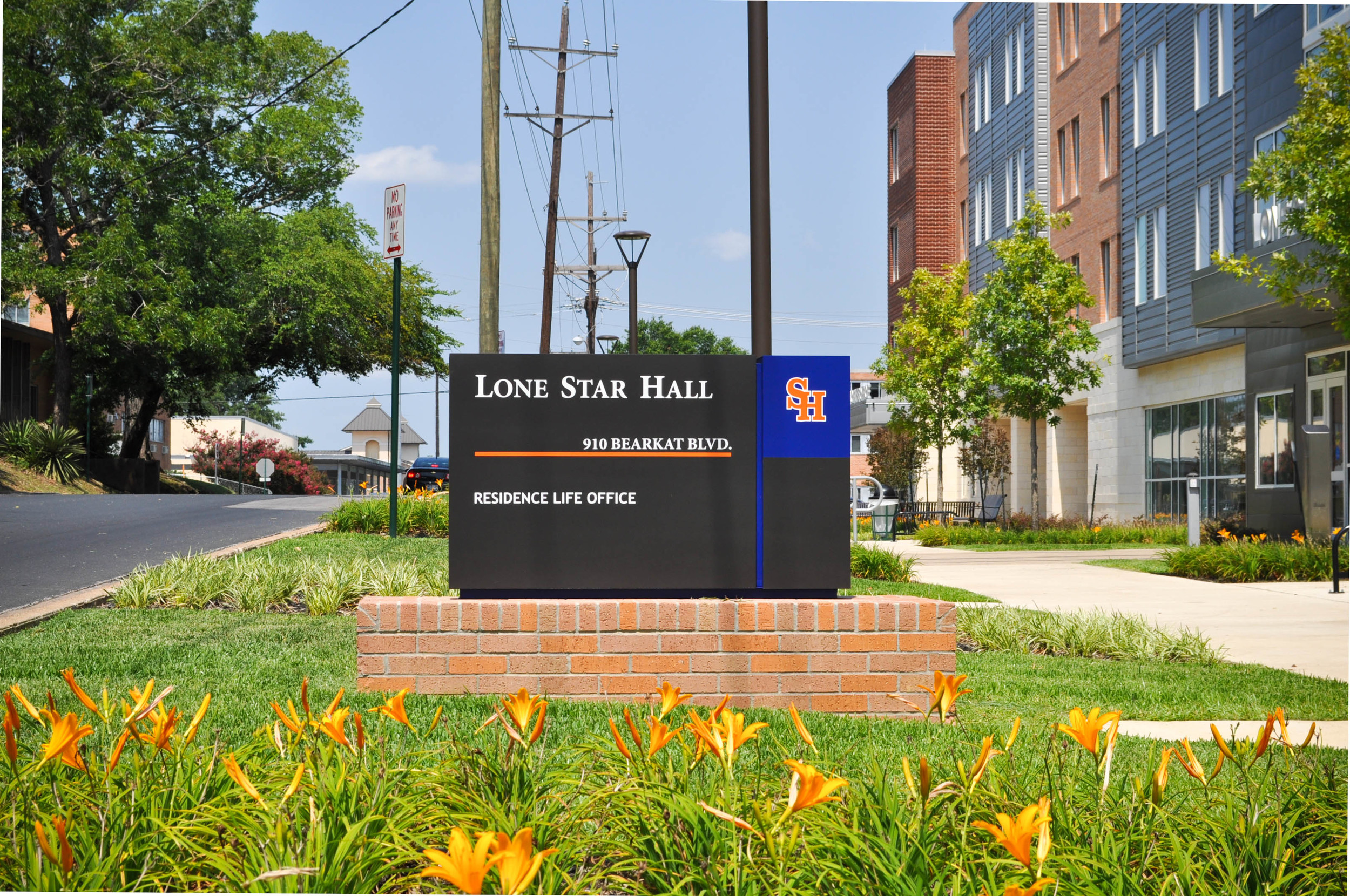
Yes. A brick monument sign is one of the most common builds we do. Matching it to an existing building is design work, not something decided on site.
Older buildings take more work. Brick lines get discontinued, and years of Houston weather change the appearance of the masonry already standing. The match that matters is the one you can see rather than the one on a spec sheet. It is settled and approved before anything is ordered, and you see it in the rendering first.
If you would rather the monument stand apart from the building than blend into it, cast stone, natural stone, stucco, and architectural concrete all work as well.
-
Yes. How many depends on how the monument was designed, since total sign area is capped and the layout is fixed once it is built. Some are built with slots held open for future tenants. Others need the panel system replaced once they fill up.
Two constructions make updates possible. An illuminated cabinet holds a separate translucent face for each tenant, secured by a retainer that opens so one panel comes out without disturbing the others. A masonry monument does the same job with a recessed frame set into the brick or stone, where flat panels drop into tracks. Either way, adding your business means fabricating one matching panel rather than rebuilding the monument.
The part tenants do not expect is who has to approve it. The panel belongs to the property, not the lease, so the request usually goes through the landlord or property manager first. They may also hold a standard the panel has to meet, such as a fixed size, a set typeface, or one background color across the whole sign.
-
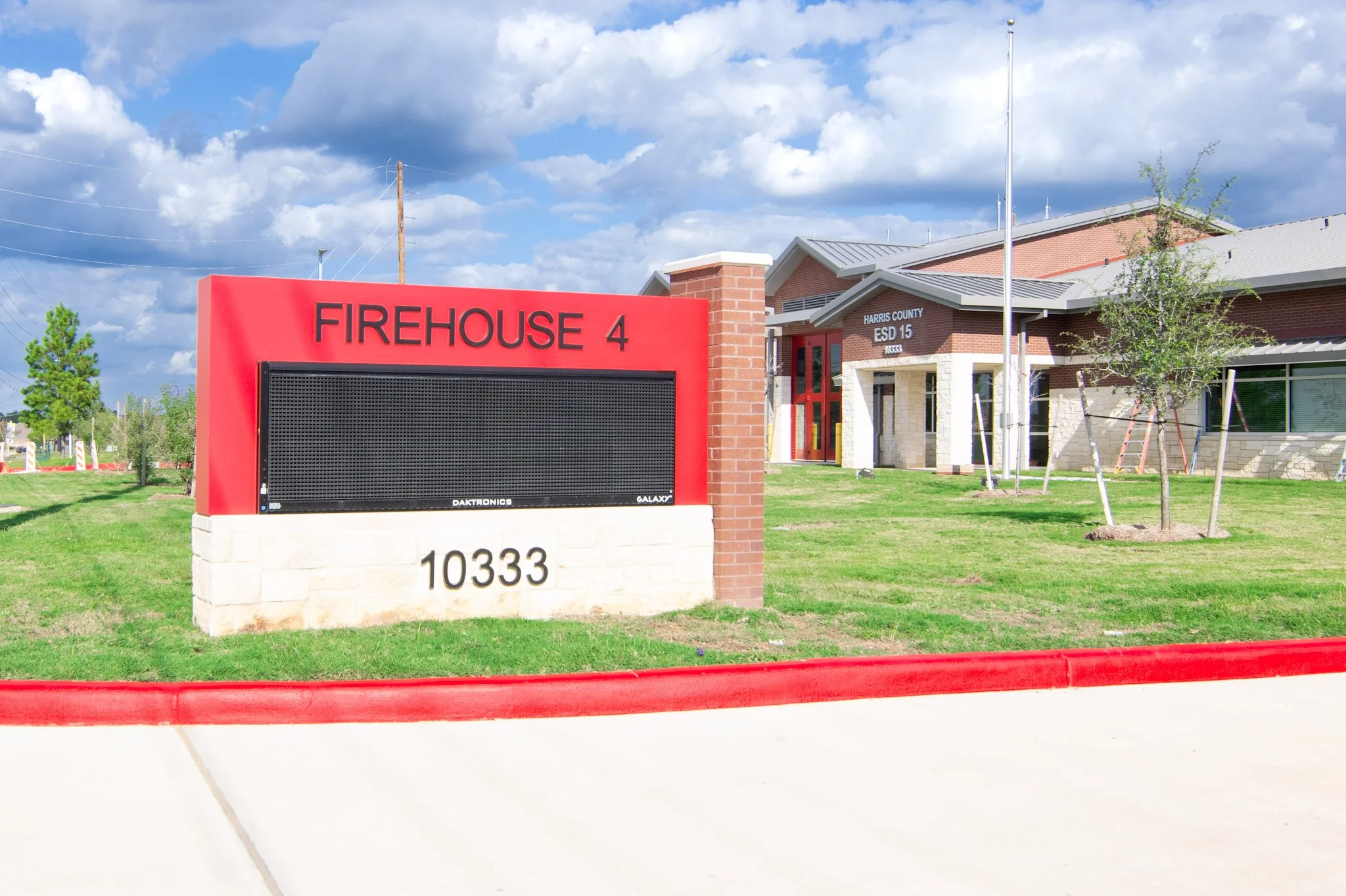
Yes. Message centers are common on digital monument signs for schools, churches, and medical campuses, anywhere the information changes but the sign should not.
Houston regulates the message center itself harder than most buyers expect. Under Section 4611(h) of the Houston Sign Code, electronic message centers are regulated as changeable message signs. Five minutes has to pass between messages, and the switch itself has to take under a second. Blinking, moving, chasing, and flashing effects are prohibited outright.
That reshapes what a message center is good for here. It is not a rotating promotional board. It is a second line of information beside your name, changed a few times a day. The value comes from what it says rather than how it moves.
Brightness is capped as well, at 6,500 nits in daylight and 1,250 nits after dark, with a light sensor that dims the display automatically. None of this rules out a message center. It means buying one for what it can legally do here rather than for what you have seen it do somewhere else.
-
Send photos and we will tell you whether the monument needs a repair or a rebuild.
Force decides it. Light contact often damages only the face or a single panel, which is a straightforward swap. A vehicle at speed can take the structure with it, and if the footing cracked or shifted on impact, the work starts underground. Storm damage does the same thing from a different cause, and rebuilding the visible part without correcting the foundation means the problem comes back.
Houston requires a permit to repair a sign, not only to build one. A quick patch by a handyman can leave you with a code problem stacked on top of the damage. We are licensed with Houston Sign Administration and pull the permit as part of the monument sign repair.
EXPLORE MORE SIGNAGE FOR YOUR EXTERIOR

BACKPLATED WALL SIGNS

METAL LETTERS

ACRYLIC LETTERS
THE MORE YOU KNOW
Discover what resources can help your business create a Texas sized impression

Lets join forces to craft beautiful and dynamic signage.
Creating an environment that is colorful and inviting is where we thrive. Let us join the fun.

From the Lonestar State to the United States!
Saifee Signs has professional installers in many metro areas across USA who can install your signage beautifully.
Houston | Dallas | Fort Worth | Arlington | Plano | San Antonio | Austin | Washington DC | New York | New Jersey | Philadelphia | Detroit | Fremont | San Jose | San Francisco | Sacramento